


















What is Earthing?
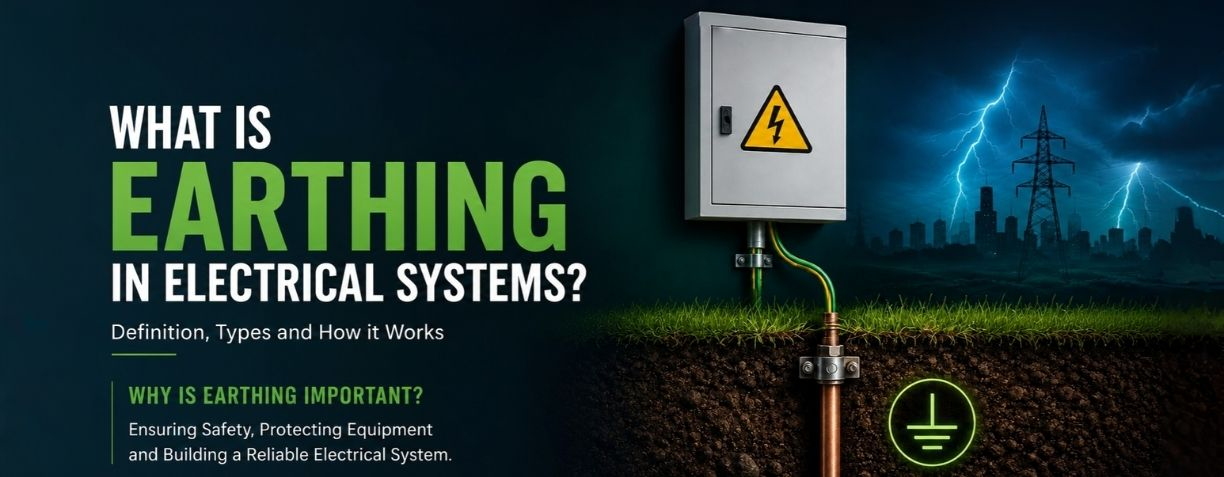
Earthing is the process of connecting electrical systems to the ground to safely discharge excess electricity. It provides a low-resistance path for fault currents to flow into the earth. At its core, earthing is all about safety; it helps protect both individuals and electrical equipment from unexpected faults. Safely guiding excess or stray current away from circuits and appliances can lower the risk of electric shock and damage. That is why earthing is not just a technical detail; it is a fundamental part of any safe electrical system.
How Does Earthing Work in Electrical Systems?
Now that you know the meaning of earthing, here’s a step-by-step guide on how earthing works:
- Connection to Ground The electrical system is connected to the earth using a conductor, typically made of copper or galvanised iron. This creates a direct physical link to the ground.
- Establishing a Low-Resistance Path This connection forms a low-resistance path that allows electrical current to flow easily into the earth when needed.
- Occurrence of a Fault When an issue such as a short circuit, insulation failure or ageing wiring occurs, excess or stray current is generated.
- Diversion of Excess Current Instead of flowing through appliances or humans, the excess current is immediately redirected through the earthing conductor into the ground.
- Activation of Protective Devices The sudden surge in current triggers safety devices like circuit breakers or fuses and causes them to trip or blow.
- Cut-off of Power Supply Once the protective devices are activated, the electrical supply is automatically disconnected to prevent further damage or risk.
- Ensuring Safety and Stability This entire process helps maintain a safe environment by preventing electric shocks, protecting appliances and reducing the risk of fire hazards.
Why is Earthing Important in Electrical Systems?
Earthing is not something you usually notice, but it quietly keeps you safe. Without it, even a small electrical fault can quickly become much more serious and riskier.
- Protection from Electric Shock: Earthing provides a controlled path for leakage current to safely dissipate into the ground, thereby reducing the likelihood of accidental contact and injury.
- Safety of Appliances and Equipment: It helps safeguard electrical devices from damage caused by sudden voltage changes or faults, allowing them to last longer and perform reliably over time.
- Prevention of Fire Hazards: Electrical faults can result in overheating and elevate the risk of fire; effective earthing plays a key role in reducing such risks by safely channelling fault currents away from the system.
- Stable Electrical Performance: It maintains voltage levels and ensures smooth functioning of electrical systems.
Types of Earthing in Electrical Systems
Different earthing methods are adopted based on factors such as soil conditions, the nature of the installation and specific safety requirements. Each approach is carefully designed to enable the safe and effective dissipation of fault current into the ground:
| Earthing Type | Description |
|---|---|
| Plate Earthing | Uses a metal plate buried deep in the ground; suitable for residential use. |
| Pipe Earthing | Involves a perforated pipe placed vertically; commonly used for efficiency. |
| Rod Earthing | Uses a metal rod driven into the ground; ideal for areas with limited space. |
| Strip or Wire Earthing | Uses strips or wires buried horizontally; often used in large installations. |
| Chemical Earthing | Enhances conductivity using chemical compounds; useful in high-resistance soil. |
Difference Between Earthing and Grounding
Like earthing, grounding also connects electrical systems to the earth. However, the purpose of grounding is different:
| Earthing | Grounding | |
|---|---|---|
| Purpose | Protects humans from electric shock | Protects electrical systems and circuits |
| Connection | Connected to the earth directly | Connected to system neutral |
| Application | Used in appliances and external parts | Used in internal circuit design |
| Safety Role | Prevents leakage current hazards | Stabilises voltage levels |
Conclusion
Earthing is not just a technical requirement but a vital safety measure that helps protect both humans and property. By allowing excess electrical current to flow safely into the ground, earthing helps keep electrical systems stable and running smoothly. Putting the right earthing measures in place is a practical way to improve safety, prevent potential hazards and ensure everything works reliably over time.